LIBBY LUNSTRUM


Research

My research begins with a recognition that the conservation of biodiversity is indeed a global (and local) good but that the costs of protecting and rebuilding nature tend to be experienced locally, especially by already marginalized communities. While my earlier (and ongoing) work has foregrounded the ways in which conservation has led to various forms of dispossession and militarization, my current work recalibrates to focus on solutions. I’m particularly interested in what ‘doing conservation differently’ can look like, ensuring it is both ecologically and socially sustainable. Much of my work is united around the theme of ecological restoration, or how to rebuild ecological processes and human connections with nature after they have been degraded or destroyed. My work is located empirically in the South African-Mozambican borderlands and the Canada-U.S. borderlands that cross Blackfoot Territory. I appreciate the privilege of being able to consider broader global trends and global best practices through the following projects.


ILER: Indigenous-Led Ecological Restoration

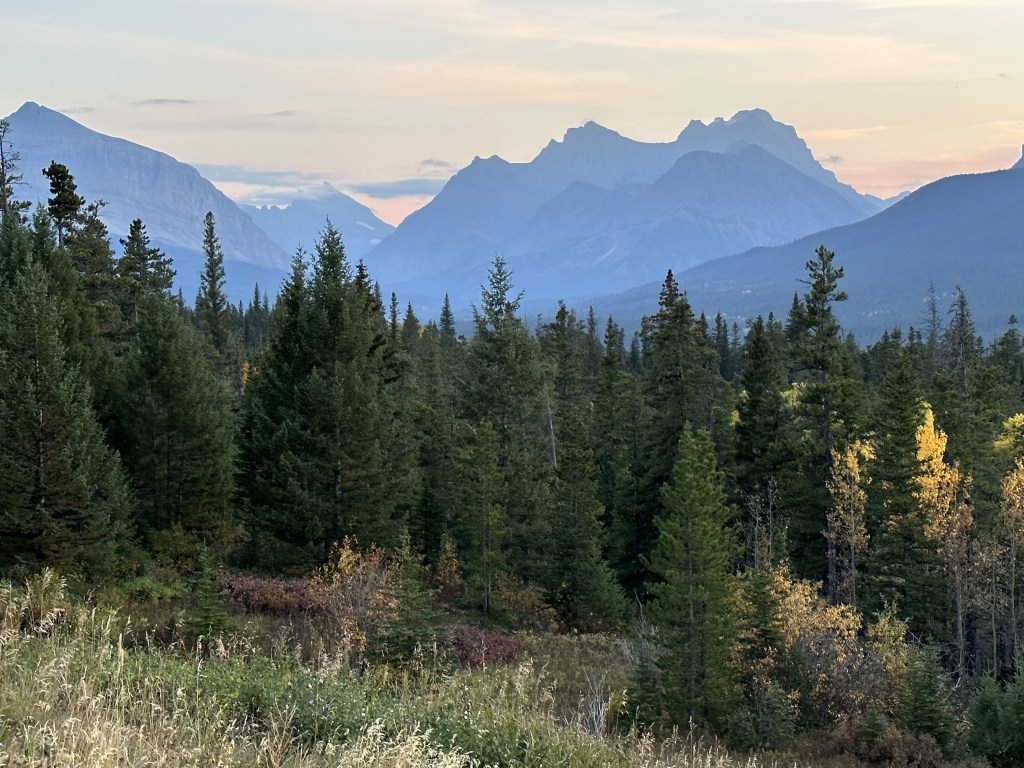
My current work is increasingly interested in how to build conservation practice that is both ecologically and socially sustainable. Working with the Blackfoot Confederacy and a group of talented scholars, this work examines how Tribal-led initiatives like the Blackfeet buffalo project confront the spatial legacies of colonial settlement to bring back species like iinnii, or buffalo, that are both culturally and ecological important and require substantial habitat. What’s inspiring about the Blackfoot Confederacy’s iinnii-centered work is that it is also helping to build a better relationship between the Blackfoot and Glacier and Waterton National Parks. As iinnii return to the parks, which were built from Blackfoot territory, after being gone for over 100 years, the parks have become an important partner to both iinnii and the Blackfoot. This offers a profound opportunity for considering how parks can and are doing conservation in a fundamentally different way through robust Indigenous engagement. Our work supports these efforts by providing data and co-authoring with Blackfoot partners to highlight the profound work being done. In co-authoring outputs with Blackfoot partners, we also collaboratively explore how to engage in ethical and equitable co–authorship.

Jurisdiction and Borders

A key theme of my research, although not always foregrounded, has been what difference international borders make to the protection of nature, ecological processes, and in turn local human communities. This is reflected in the fact that the vast majority of my work has focused on borderlands, whether this is the Great Limpopo Transfrontier Park across what is today the the South African-Mozambican borderlands or Blackfeet Territory and the Glacier Waterton International Peace Park across what is today the Canada-U.S. borderlands. If there is a single lesson here, the work shows that while ‘nature may know no boundaries,’ in practice borders severely transform both ‘nature’ and the communities who depend on it. But nature or connection to the more-than-human world provide numerous opportunities to heal from the spatial and political fractures caused by borders. My new work in this area is driven by a keen interest in the concept and application of jurisdiction, a parsing of space and governance that is hidden in plain sight. Starting by asking the seemingly simple question of ‘what is jurisdiction anyway,’ the work attempts to answer this and examine jurisdiction’s profound implications for humans, wildlife, nature as kin, and our broader connections with the natural world.

Green Militarization and Militarized Landscapes 

My work has stood at the forefront of a growing academic, practitioner, and activist interest in green militarization. Understood as ‘the use of military and paramilitary (military-like) actors, techniques, technologies, and partnerships in the pursuit of conservation (Lunstrum 2023),’ a global embrace of green militarization is transforming conservation in general and particularly in response to the illegal wildlife trade. While my early work chronicled the resurgence and intensification of green militarization in Southern Africa, my current work has begun to explore  how it shapes conservation technologies like drones, and what it might take to demilitarize conservation. Work in this area has also sparked my growing interest in Militarized Landscapes, which considers the broader relationship between conflict and environmental change. Working with my colleague Lisa Brady, our work examines militarized landscapes as landscapes and related environmental processes that are transformed by political hostilities and broader military build-up as well as landscapes transformed by biodiversity loss and climate change, which can generate conflict.

Environmental Displacement 

One of the key themes of my earlier and ongoing work has been how conservation practice has displaced communities from their homelands, or what is called conservation-induced displacement. Building on these contributions and collaborating with colleagues working on climate change and resource extraction, we have begun to explore the theme of environmental displacement more broadly. This includes how the Anthropocene – this broader geologic epoch in which humans are the primary drivers of environmental change – is characterized by various forms of displacement, from climate refugees to conservation-induced displacement. 

ECOLOGICAL RESTORATION

FUTURE PROJECTS

While I haven’t published anything on the topic yet, I’ve visited Mozambique’s spectacular Gorongosa National Park several times over the last few years to better understand what it takes to rebuild a national park after war and what this means for the people living in the park’s expansive buffer zone.